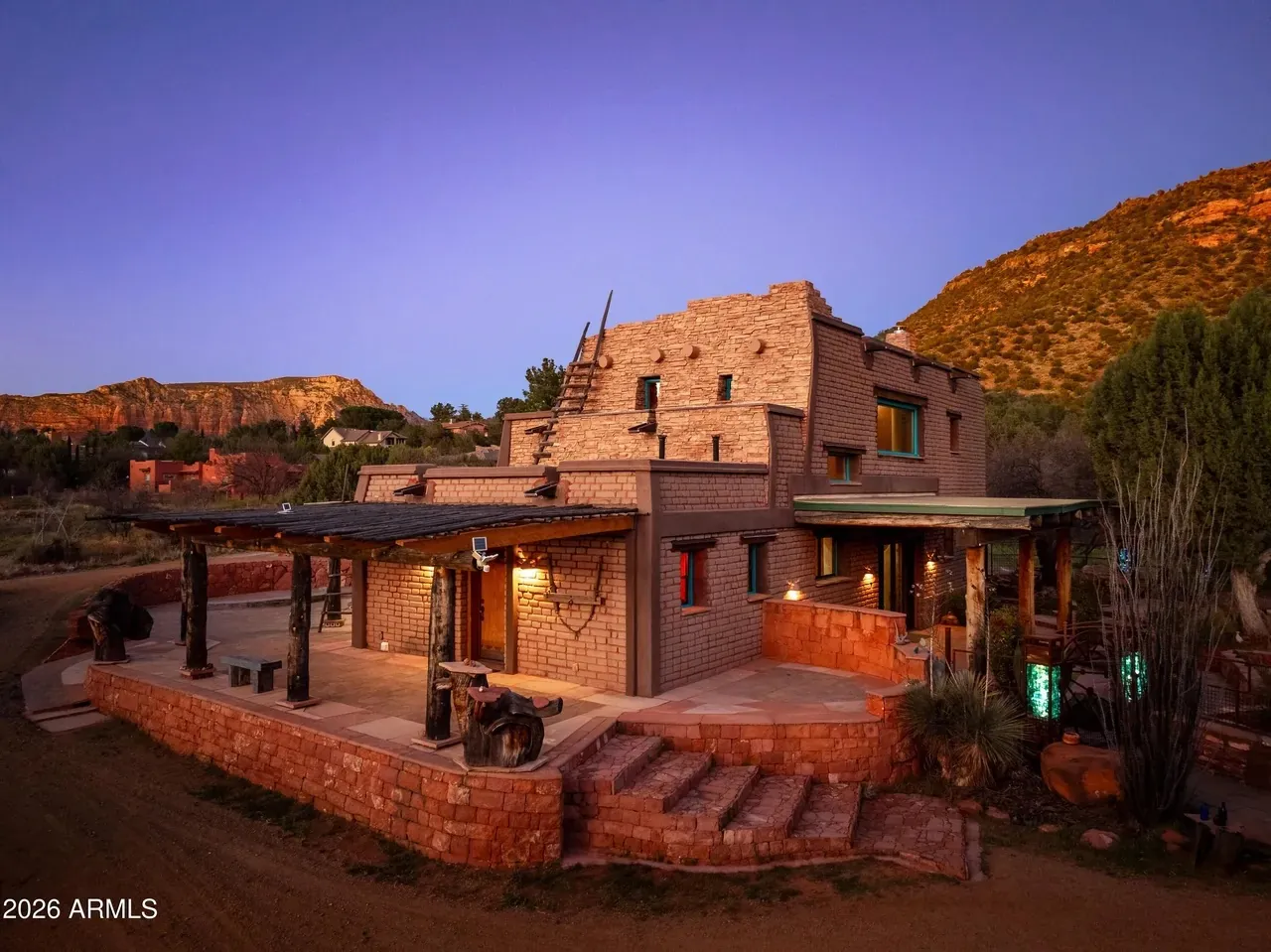
The asset was never the uncertainty. 50 Hudson was a singular property — organic architecture in the spirit of Frank Lloyd Wright's Taliesin students, but more sculptural, more idiosyncratic. The main residence carried the architectural significance. The economic story was somewhere else, and that's what made the deal interesting.
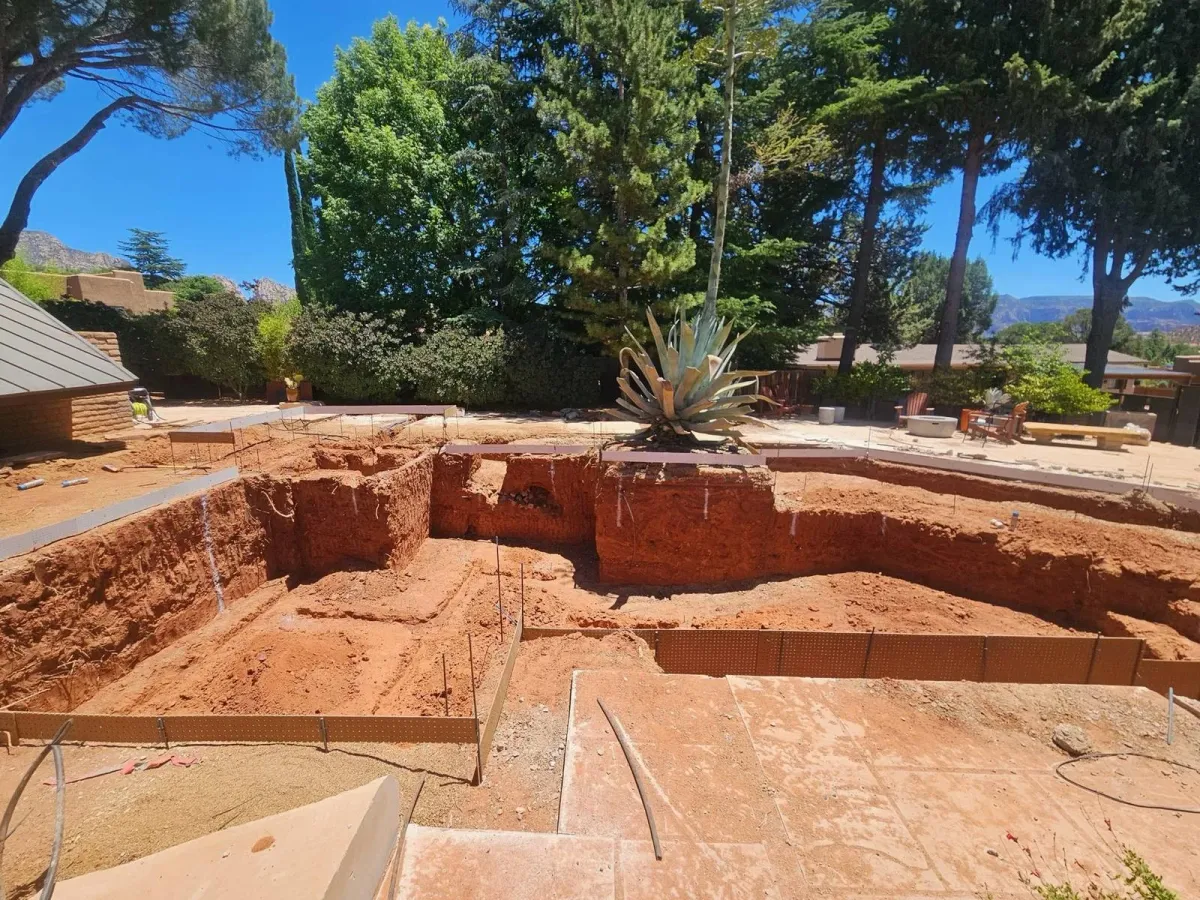
The first lever was the garage. A 1,250 sqft attached structure that, with a second-story addition above, could be permitted and built into a second living unit — effectively doubling the rentable footprint without a separate land acquisition. The lot allowed up to two additional structures on top of that. Zoning, setbacks, and parcel size opened the door to a compound build-out: not a renovation, an expansion, with the original architecture as the anchor of something larger rather than the totality of the asset.
The guest segment was deliberately different from 430 Last Wagon. Last Wagon is positioned for design-traveler couples and small groups — quiet, architectural, contemplative. 50 Hudson, with the garage built out, was Melisa's vision of a themed family compound that leans into Sedona's documented influence on a generation of animated film. A different guest, a different demand curve, no cannibalization of the asset we already owned.
So we assumed the things that felt safe to assume. That full asking price would be the decisive variable in a segment where most listings sit. That financing with demonstrated liquidity and a clean inspection posture would close the certainty gap against a cash buyer. That the themed-family positioning would extend the portfolio without competing with ourselves. That a documented expansion plan on a parcel zoned for it would entitle. That $1.45M — the top of our range, not the bottom of an escalation — was honest underwriting.
The real uncertainties were never about the building. They were about the build path and the seller's decision criteria: conversion costs and timeline with no bid set, expansion-permit risk in a tightening STR political environment, and — the one that mattered — what the seller valued beyond price. We knew the asking number. We did not know whether speed, certainty, buyer profile, or post-sale use would move the decision. We submitted into that information gap.
The risks we underwrote were operational. The risk that arrived was speed. A competing buyer offered the same $1.45M with 50% cash down — roughly $725,000 — and a faster close. They won. What stings: that wasn't an all-cash offer we could never have matched. Coming out of the 430 Last Wagon tax event, a structure in that range was potentially within reach. We were under time pressure, we said yes to the offer we had in hand, and we submitted it as-built. No pause. No architecture review. No question asked.
The full teardown covers what 50% down actually buys from the seller's seat, what could have gone wrong if we'd won, why this was still a sound process despite the lost asset, and what would have made winning the better decision. It's the work behind the loss — not the loss by itself.