Publishing a Decision Desk before the outcome is known is a deliberate choice. The other four installments in this series each landed on a clear verdict — green, red, or sound-process-lost-asset — because the deal had already resolved by the time we wrote. The retrospectives were honest, but they were also safe. Hindsight is a generous editor. You get to choose which uncertainties to highlight once you already know which ones mattered.
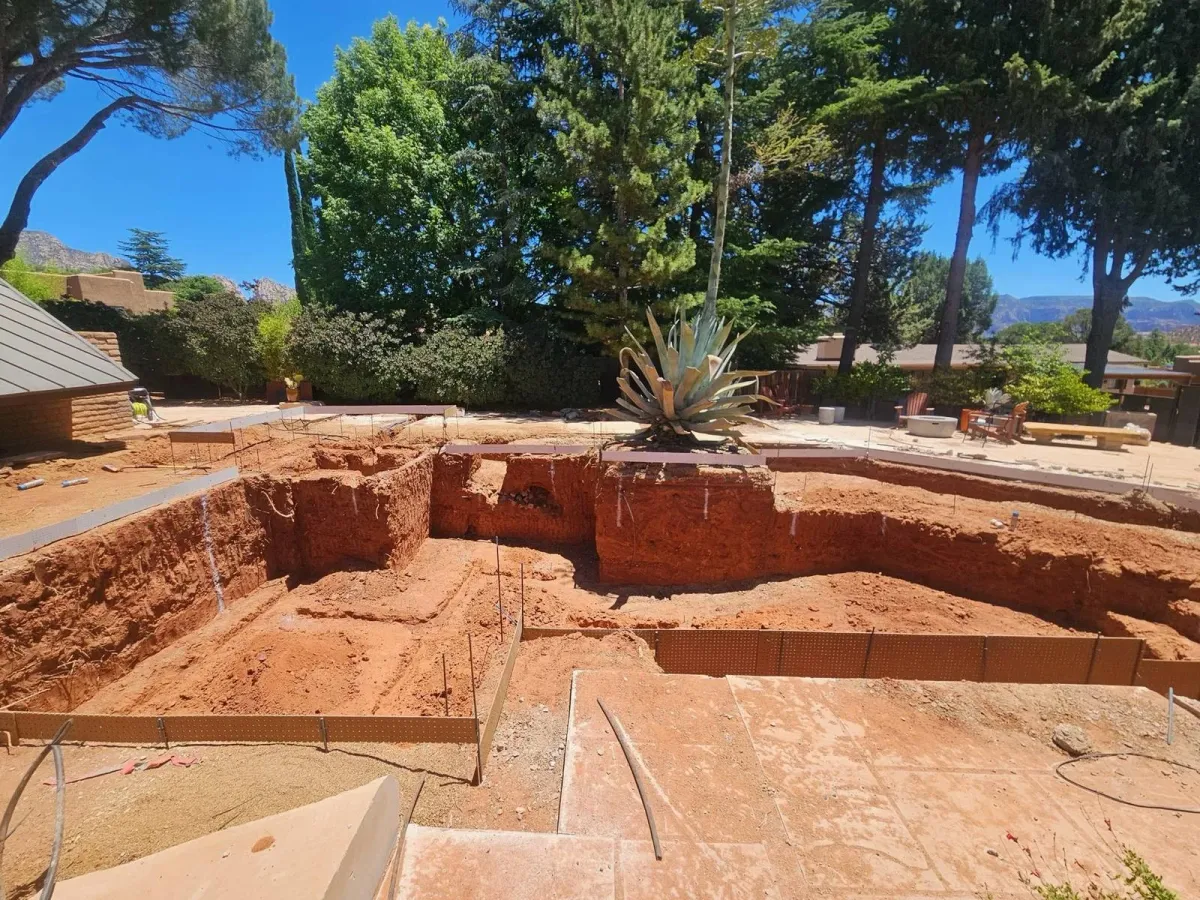
This one is different. 430 Last Wagon is in active renovation. The pool is being excavated as this is being written. Interior work is sequenced behind inspections we don't control. The relaunch target is September 1 — the opening of Sedona's fall high season, the window the cost-segregation math was always pointed at. Miss Sept 1 in a meaningful way and we don't just lose a few weeks of revenue. We miss the segment of the year that defines the year.
The decision to self-fund the renovation in cash was made before the schedule pressure became visible. At the time, the logic was straightforward: construction debt on a hospitality asset with no rental history would have priced punitively, the draw schedule would have introduced a second timing constraint on top of the inspection calendar, and the cost-seg position from the December 2025 acquisition gave us latitude to deploy capital without raising it. None of that has changed. What has changed is the cost of being right about the financing structure: cash insulates the asset from one kind of risk and exposes us, personally, to every other kind. There is no lender to share the schedule pain with.
The inspection-gated schedule is the part of this that doesn't show up in a renovation budget line item. You can pay to expedite some things. You cannot pay to expedite a county inspector's calendar in a market where every contractor is competing for the same window. A two-week slip on a pool inspection is a two-week slip on the deck, which is a two-week slip on the landscape, which is the difference between a Sept 1 opening and a Sept 22 opening. Sept 22 is not catastrophic. Sept 22 is a different financial year.
What we're holding firm on: the architectural integrity of the renovation, the pool design as specified, the finish level on the primary bedroom and the great room. Those are the elements the asset gets photographed for. Those are the elements the early reviews compound on. Compromising those to chase a calendar is the kind of decision you regret for the entire holding period.
What we're prepared to give up: the secondary bath upgrade, the casita refresh, certain exterior landscape phases. None of those are revenue-defining in the first 90 days of operation. All of them can be sequenced into the November shoulder or the post-holiday quiet without compromising the launch.
The line we've drawn for ourselves: if by August 1 the pool, the great room, and the primary bedroom are not on a confident path to Sept 1, we stop trying to make the fall season and we relaunch for spring. That decision will be unpleasant. It will also be the right one. Forcing a Sept 1 opening on an asset that isn't ready damages the photography, damages the first reviews, and damages the trajectory of every subsequent quarter. Spring is a real season in Sedona. Spring also doesn't carry the design-traveler weight that fall does — which is exactly why we're not pretending the call is symmetric.
The full Decision Desk lays out the renovation snapshot in detail, the gating mechanics we're managing day to day, the contingency capital we've held back, the scenarios we've modeled for a missed Sept 1, and the criteria we'll use to decide. The retrospective — green light, red light, or honest middle — will follow after relaunch.