Familiarity is supposed to be an advantage in a deal. You know the street, the regulatory environment, the guest profile, the demand dynamics. You've already done the months of due diligence. The next property over should be the easiest underwriting decision you ever make. That conviction is also exactly what makes the second property the most dangerous: familiarity breeds belief faster than the numbers sometimes justify.
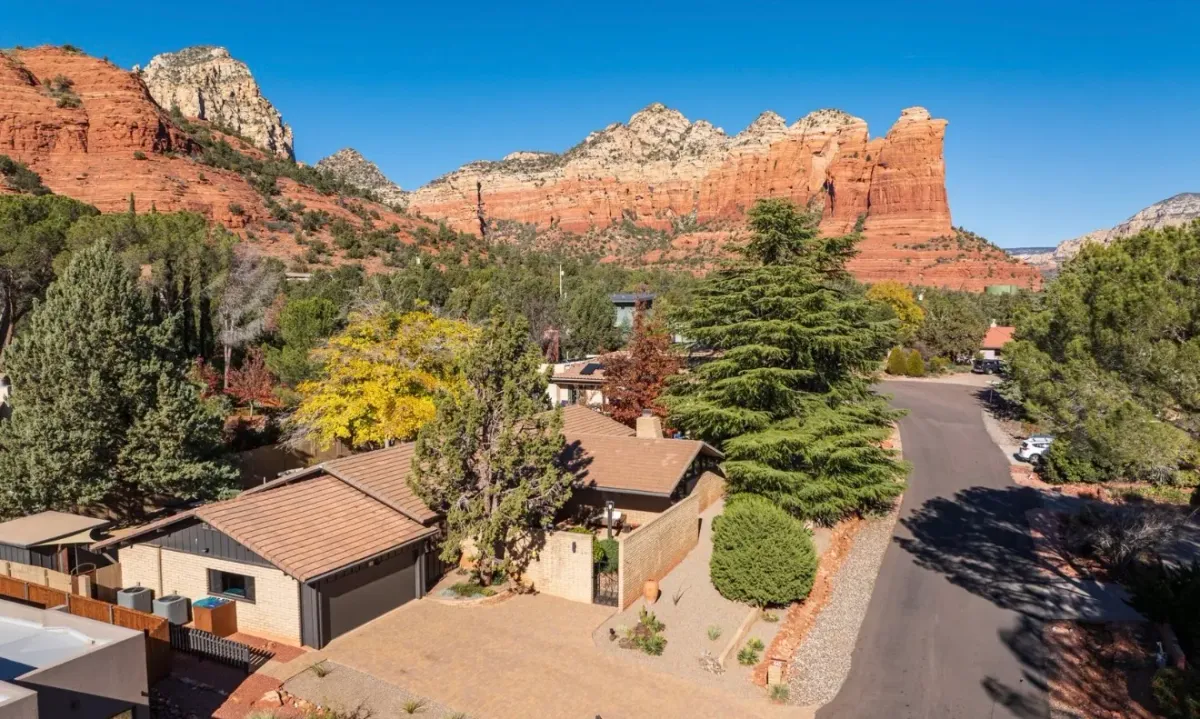
445 Last Wagon checked every box that mattered at first read. A 1969 mid-century ranch, recently renovated by the previous owners — new finishes, quartz counters, updated electrical, partial HVAC, a concrete tile roof. An attached studio with its own half bath and ductless system gave us a flexible space we could see multiple uses for. Multiple courtyards framed by 8-foot fired adobe walls created an intimacy that's rare in a market this exposed. The interiors photographed well. The property would have showed beautifully on any luxury STR platform.
The compound vision was real. With 430 across the street already moving toward 12-guest capacity, adding 445 would bring the combined inventory to 20+ guests — a tier that's functionally nonexistent in this market. Weddings, corporate retreats, large-family multi-generational trips: all demand segments we couldn't address with a single property, all reachable the moment we owned both. The competitive moat wouldn't just be strong. It would be singular.
Then the per-square-foot math started talking. At 430 we'd acquired 3,880 sqft at roughly $538 per square foot. At 445 the listing of $1.875M for 2,488 sqft worked out to roughly $753 per square foot — a 40% premium over the property directly across the street. We assumed negotiation could close that gap meaningfully. The appraisal that came back later in the process suggested we were right about the gap existing, but ambiguous about where exactly the appropriate price actually landed. The seller had a number, we had a number, and the band of defensible valuations was wider than we were comfortable underwriting against.
The second uncertainty was the expansion thesis. At 2,488 sqft for a 3-bed/2.5-bath layout, 445 was undersized for the nightly rates we'd need to justify the acquisition cost. Adding meaningful square footage was supposed to fix that — we'd looked at additions on every face of the home, expansion of the outbuilding, and entirely new detached structures. Sedona's construction setback rules came back more restrictive than we'd modeled. On a 0.28-acre lot with an existing footprint already occupying significant buildable area, the math capped any addition at roughly 400 square feet in any direction. Four hundred square feet does not change the revenue capacity of a 2,488-sqft home in a material way. The expansion lever — central to our underwriting — was effectively dead.
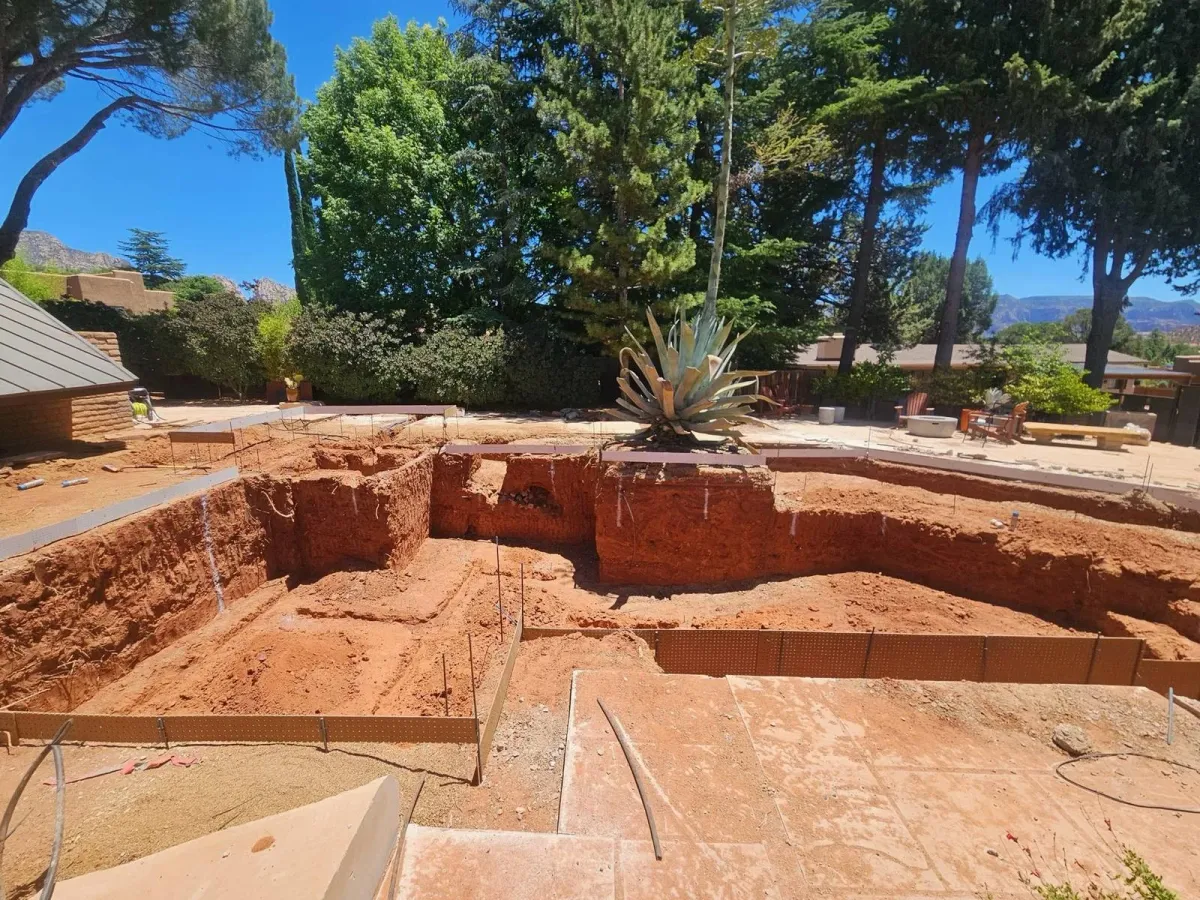
Third, the opportunity cost of split attention. 430 Last Wagon was already in active renovation with a pool build scheduled for June. It needed our full focus to launch the way the asset deserved. Every week we spent on architectural consultations, setback analysis, and contract negotiations for 445 was a week we weren't spending on 430. The higher-conviction asset was at risk of getting compromised by a lower-conviction one we hadn't yet committed to.
Four issues in a row, each defensible individually, none clearly fatal in isolation. The pattern is what mattered. The full teardown covers what could have gone wrong if we'd pushed through, why walking away was the right call (and what would have changed our mind), the moment we knew the deal had started closing us, and the Decision Verdict.